The new MY 2011 versions are being introduced with the name Fiat Ducato (Fig. 1) unchanged. For these new versions, various technical and functional innovations were introduced, including:
Finally, it offers a new, more articulated and diversified range: with the matching of body-engine-mechanic components you can have 2000 articulated versions for goods transport, people transport and basic versions for conversions and different trims; in particular, the van range has 8 different load volumes, from 8 to 17 m³. At the beginning, the MY 2011 range offers the following engines:
Fig. 1 – Front view - Van version 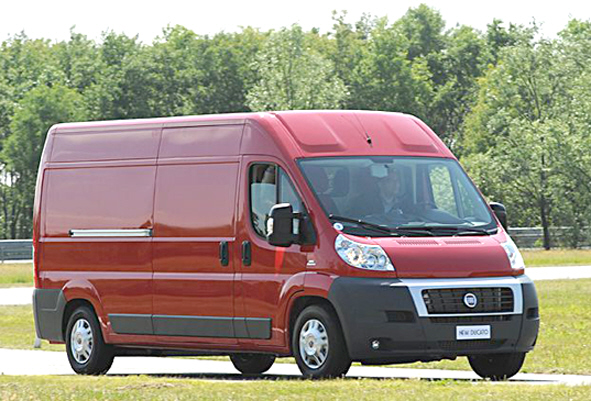
The identification data of the new versions and data related to the new engines are given here below, along with the main technical data and specifications for new MY 2011 versions. DIMENSIONSDimensions are expressed in mm and refer to the vehicle fitted with standard tyres. Height is measured with vehicle unladen Fig. 2 – Van version 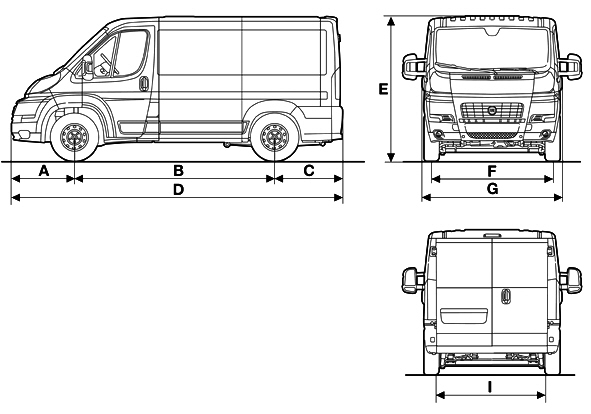
The sizes vary according to the versions within the limits indicated above. Fig. 3 – Truck version 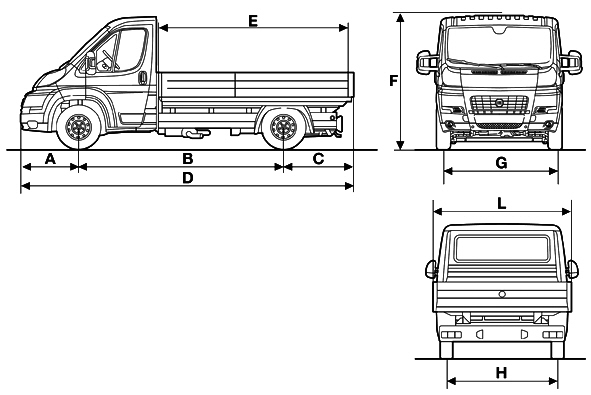
The sizes vary according to the versions within the limits indicated above.
The sizes vary according to the versions within the limits indicated above.
The sizes vary according to the versions within the limits indicated above. ENGINESAll Ducatos feature four cylinder in line engines with four valves per cylinder and a twin overhead camshaft. 2.0 and 2.3, 130 HP engines have a fixed geometry turbocharger with intercooler, while the two more performing engines, 2.3, 148 HP and 3.0, 177 HP, have a variable geometry turbocharger. The engine head is made from aluminium alloy, whilst the crankcase is cast iron. The pistons have cooling ducts, the geometry of the inlet and exhaust manifolds has been improved. All engines are equipped with an EGR system with exhaust gas recirculation cooling, managed directly by the engine management control unit. The main features and specifications of the different engines are provided below. MAIN SPECIFICATIONS
2.0 MultiJet (115) ENGINE This engine is featured by low consumption and high flexibility and is the ideal solution for being used especially on short-medium journeys (Fig. 4). When compared with the previous 2.2 JTD, 100 HP Euro 4 engine, the new 2.0 MultiJet, 115 HP engine has increased power (15% of power and +12% of max. torque) while ensuring more acceleration and setting-off capacity uphills and dramatically reducing consumption and emission at the same time. The 2.0 MultiJet 115 HP engine is featured by a low weight (about 180 kg). Fig. 4 – 2.0 MultiJet engine (115) 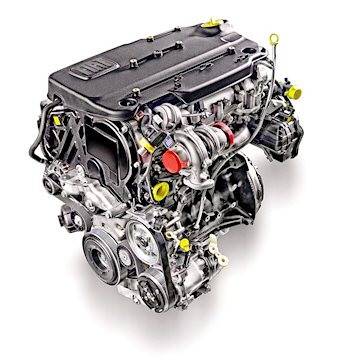
2.3 MultiJet (150) ENGINE Ducato MY 2011 has a 148 HP engine, with variable geometry, high efficiency turbocharger (Fig. 5). This engine has a prompt reply and brilliant performance thanks to its remarkable power and torque increase, with emission and consumption values similar to the previous 2.3 JTD, 130 HP engine. Fig. 5 – 2.3 MultiJet (150) engine 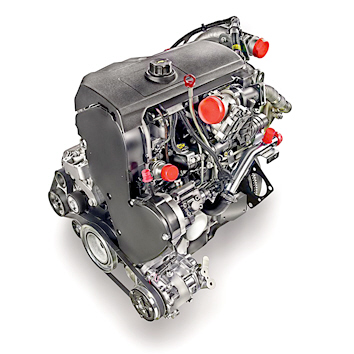
3.0 MultiJet (180) ENGINE It is the most powerful engine of the new Ducato. Compared with the previous 3.0, 157 HP Euro 4 engine, this power unit achieves a 13% power increase with consumption and CO2 emission reduction. The 3.0 MultiJet 180 engine (Fig. 6) uses a variable geometry turbocharger, with glow plugs directly located in the combustion chamber, controlled by the engine management control unit. The power unit has a cast iron lower crankcase, with integrated bearings and double mass flywheel to dampen vibrations generated by the engine, with a remarkable noise reduction. The timing is the chain-driven type with twin overhead camshaft. Fig. 6 – 3.0 MultiJet (180) engine 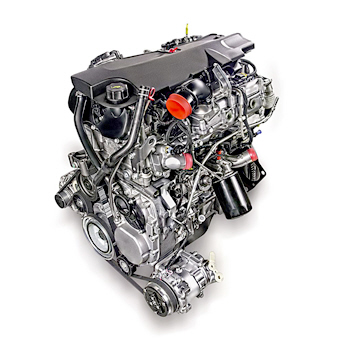
GEARBOXESThe following types of gearbox are fitted depending on the various engine types:
BRAKESThe vehicle is standard fitted with the ABS system formed by a hydraulic control unit with 8 solenoid valves, 4 active sensors and 4 channels with Electronic Brake-force Distribution (EBD), dividing the braking action over all four wheels to prevent wheel locking and guarantee full control of the vehicle. The ESP (Electronic Stability Program) is available upon demand, which intervenes in emergency conditions to control the vehicle dynamic manoeuvres. Basing on the vehicle rotation data around its vertical axis (yaw speed), on lateral acceleration and on steering wheel angle set by the driver, the system calculates whether the vehicle is driving round a bend within the limits of its grip and, in case of need, brakes the wheel concerned or reduces the quantity of fuel sent to the engine to reduce engine power. The ESP is integrated by the following systems:
All vehicles come with front and rear disc brakes, with the following features:
TRACTION PLUS SYSTEMUpon demand, MY 2011 vehicles with ESP can be equipped withTraction Plustraction control system, with increases the vehicle driving capacity on rough grounds, with poor grip, by locally engaging the braking system, acting like a limited slip differential. When a driving wheel is in poor grip conditions, the system control unit detects the slip and commands the hydraulic circuit to apply braking force to the slipping wheel, thus shifting drive to the wheel on the surface offering better grip. This makes the vehicle easy to drive, maintains directional stability and control and ensures the best possible traction even over the roughest and most slippery surfaces. The system is operated by the button T+ on the dashboard (Fig. 7) and can function at speeds of up to 30 km/h; once this speed is exceeded, the system is automatically deactivated. Fig. 7 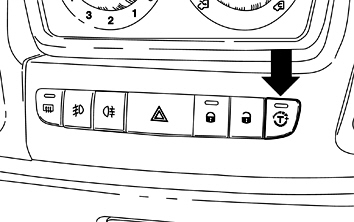
RIMS/TYRES
Spare wheel: 125/80R15 95H space-saver wheel on 5-seater people transport versions; standard wheel on other versions.
COLD TYRE INFLATION PRESSURE (bar)
(*) GVW: Gross Vehicle Weight When the tyres are warm, the inflation pressure should be + 0.3 bar compared with the prescribed figure. However, recheck that the value is correct with the tyre cold. With snow tyres, add +0.2 bar to the inflation pressure value prescribed for standard tyres. FRONT WHEEL TOE IN The figure given refers to checking the toe in with vehicle unladen and in running conditions, i.e.: with a spare wheel, tools, accessories, supplies, full fuel tank and tyres inflated to the prescribed pressure.
INTERIORSThe interiors of Ducato MY 2011 were renewed with the colours matching the plastic parts of the dashboard and new fabrics for the seats. INSTRUMENT PANEL The presence and position of the controls, instruments and indicators on the dashboard (Fig. 8) may vary depending on the version. Fig. 8 - Dashboard 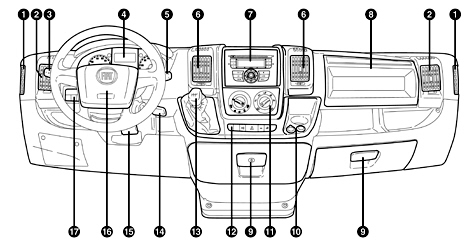
Key 1. Fixed side air vents 2. Adjustable side air vents 3. Left stalk: external light control 4. Instrument panel and warning lights 5. Right stalk: windscreen wiper, rear window wiper, trip computer controls 6. Adjustable centre air vents 7. Sound system (for versions/markets, where provided) 8. Front air bag on passenger side (glove compartment for versions/markets, where provided) 9. Glove compartment 10. Cigar lighter/12 V socket 11. Heating/ventilation/climate control system controls 12. Controls in the dashboard 13. Gear lever 14. Ignition switch 15. Steering wheel adjustment lever 16. Driver's front airbag/Horn 17. Control plate for lamp/headlamp alignment adjustment/digital display/multifunction display TELEMATIC SYSTEMDifferent systems or preparations are available on the Ducato MY 2011 (fitted as standard or available on request for certain versions/markets) designed to meet all requirements, namely:
BLUE&METM SYSTEMUpon demand, the vehicle can be fitted with the Blue&MeTM telematic system. Thanks to its complete integration with the voice commands, the steering wheel controls, the car radio controls, the USB port and the information on the instrument panel multifunction display, it performs all the handsfree, SMS reader and Media Player functions. Fig. 9 - Display, controls on the steering wheel and USB port 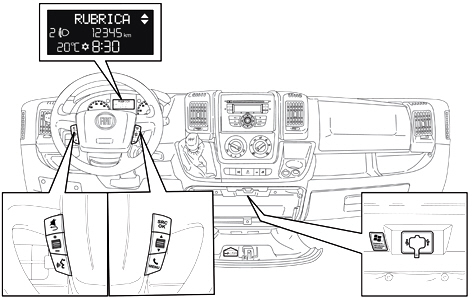
PREPARATION TO INSTALL A PORTABLE NAVIGATION SYSTEM(for versions/markets, where provided) On car equipped with the Blue&Me™ system, there may be the possibility to install the Blue&Me™ TomTom® portable satellite navigation system which is available from Lineaccessori. Install the portable navigation system by fitting the relevant mounting bracket in the housing shown (myport) in Fig. 10. Fig. 10 - Myport 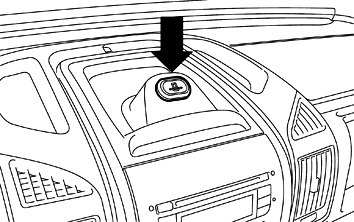
NETWORK INTERVENTIONS
|
||||||||||||||||||||||||||||||||||||||||||||||||||||||||||||||||||||||||||||||||||||||||||||||||||||||||||||||||||||||||||||||||||||||||||||||||||||||||||||||||||||||||||||||||||||||||||||||||||||||||||||||||||||||||||||||||||||||||||||||||||||||||||||||||||||||||||||||||||||||||||||||||||||||||||||||||||||||||||||||||||||||||||||||||||||||||||||||||||||||||||||||||||||||||||||||||||||||||||||||||||||||||||||||||||||||||||||||||||||||||||||||||||||||||||||||||||||||||||||||||||||||||||||||||||||||||||||||||||||